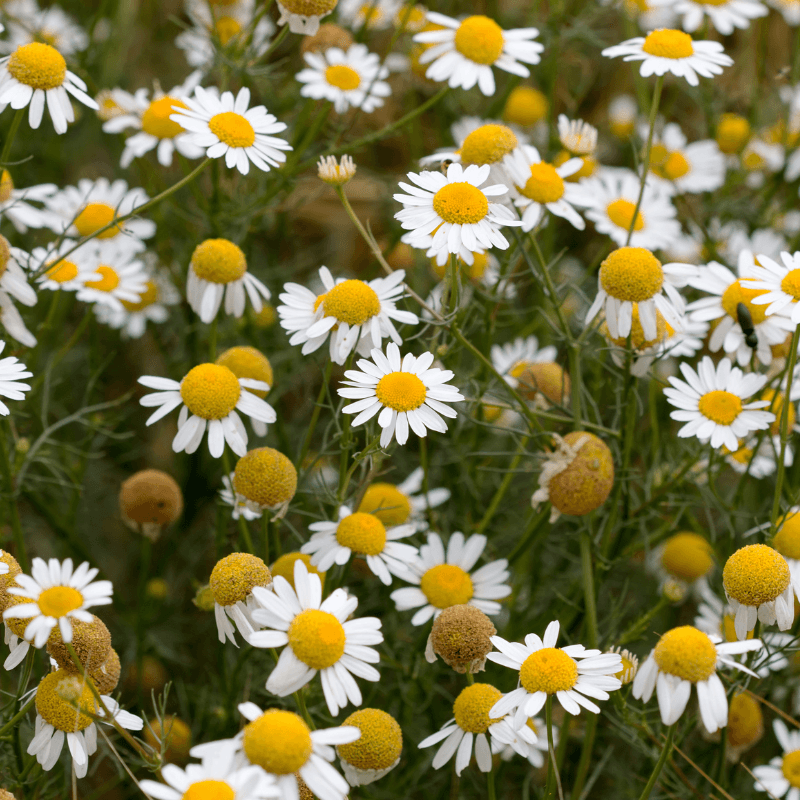
German Chamomile
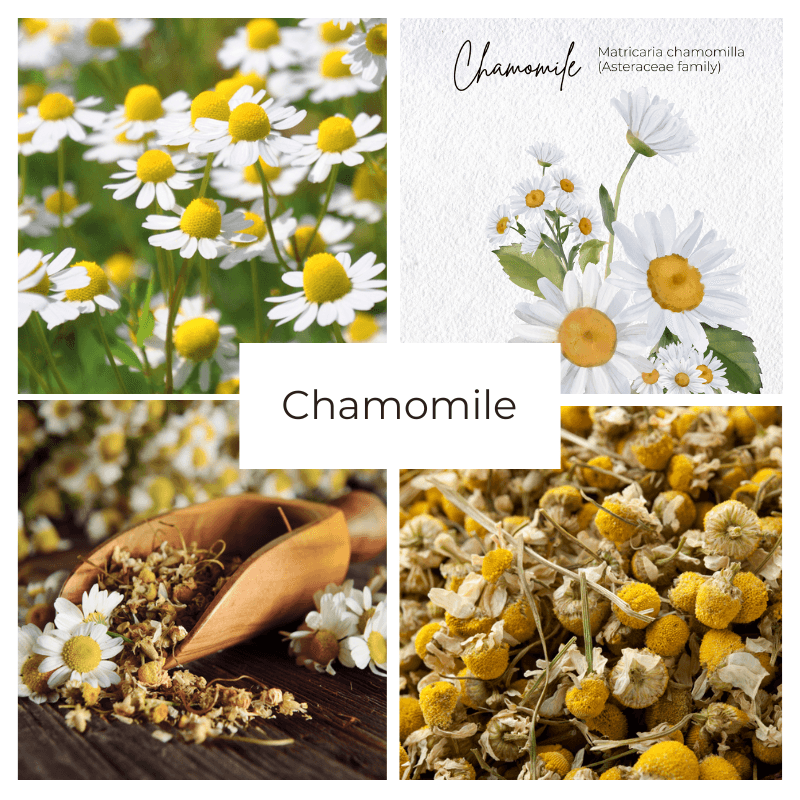
Matricaria chamomilla (also known as Matricaria recutita)
Asteraceae (Daisy Family)
Coming soon.
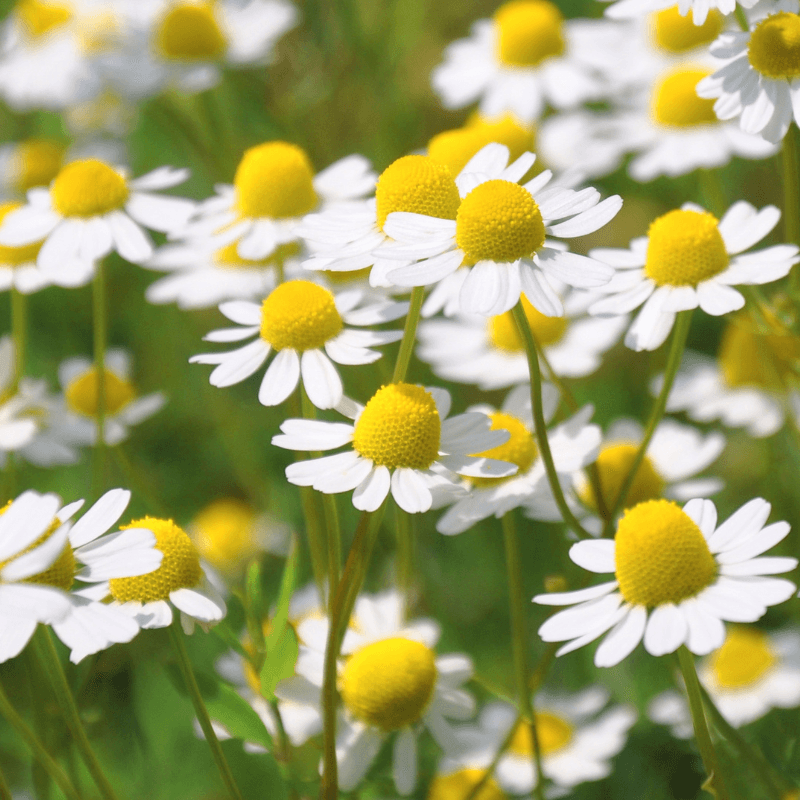
German Chamomile (Matricaria chamomilla)
Overview
German Chamomile offers a tender, steadying presence that works through gentleness rather than force. Known across centuries and cultures as a plant of comfort and restoration, it brings softness to edges worn sharp by tension, pain, sleeplessness, and the accumulated strain of daily living. This is a plant of permission, of release, quietly inviting the nervous system to remember ease. Its apple-sweet fragrance carries an inherent kindness, a quality that makes it particularly suited for those moments when what's needed most is simply to soften and let go. From soothing inflamed tissues to calming restless minds, German Chamomile works with remarkable versatility while remaining profoundly gentle.
Energetic & Emotional Profile
The energy of chamomile moves like a slow exhale. It works with the body's natural inclination toward rest, gently coaxing tight places to unclench and restless minds to settle. There is something maternal in its nature, not in an overbearing way, but with the kind of steady, uncomplicated care that allows genuine relaxation. Chamomile doesn't demand anything. It simply offers space for the nervous system to downregulate, for irritation to ease, for sleep to come without struggle. Emotionally, it speaks to the part of us that's been holding on too tightly, reminding us that safety can be found in softening, that rest is not weakness but restoration.
Traditional Uses
Herbalists have long regarded German Chamomile as one of the gentlest yet most reliable remedies in the materia medica. It has been used traditionally to ease digestive upset, particularly when tension manifests in the gut, to calm frayed nerves, to soothe inflamed skin, and to encourage restful sleep. Beyond these well-known applications, German Chamomile has been valued for pain relief, particularly menstrual cramps, headaches, and inflammatory pain conditions. Its anti-inflammatory compounds make it especially effective when pain has a hot, inflamed quality.
In hair care traditions, German Chamomile has been used for centuries to brighten blonde hair, soothe irritated scalps, and strengthen hair follicles. Rinses made from the strong infusion were used to add golden highlights and treat dandruff, while the flowers were infused in oils for scalp massage tonics. Prepared most commonly as tea, German Chamomile has also been used in compresses, baths, steam inhalations, hair rinses, and topical preparations for its anti-inflammatory and calming properties.
In European folk medicine, German Chamomile was a household staple. German and English herbalists used it for what they called "nervous stomach," childhood colic, and restless sleep. The flowers were sewn into small pillows placed near the bed to encourage peaceful dreams. Women used strong chamomile tea as a final hair rinse after washing, both for its beautifying effects and to soothe scalp irritation. In traditional medicine systems across Europe, German Chamomile was considered particularly suited for children and those with sensitive constitutions, valued for its ability to calm without sedating, to soothe without suppressing.
Appalachian herbalists adopted German Chamomile into their practice, often combining it with catnip and fennel for colicky babies, or brewing it strong for adults dealing with anxiety-related digestive complaints. It was one of the "simples" kept on hand in most mountain households, trusted for its reliability and mildness. Mothers would steep it for teething children, and it was given to those recovering from illness to ease the transition back to strength without overwhelming delicate systems. Mountain women also used the cooled tea as a rinse for children's hair, both to lighten it in summer and to discourage head lice.
Safety Considerations
Chamomile is generally considered one of the safest herbs, even for children and during pregnancy when used in normal culinary amounts. However, those with allergies to plants in the Asteraceae family (ragweed, chrysanthemums, marigolds) should exercise caution, as cross-reactivity can occur. Very rarely, individuals may experience allergic reactions. Those taking anticoagulant medications should consult with a healthcare practitioner, as chamomile contains natural coumarins. As with any herb, thoughtful consideration of individual health contexts remains essential.
Tags
calming-herb, nervous-system-support, digestive-aid, sleep-support, pain-relief, anti-inflammatory, menstrual-support, hair-tonic, scalp-health, gentle-remedy, child-safe, tension-relief, traditional-medicine
Tea Recipes
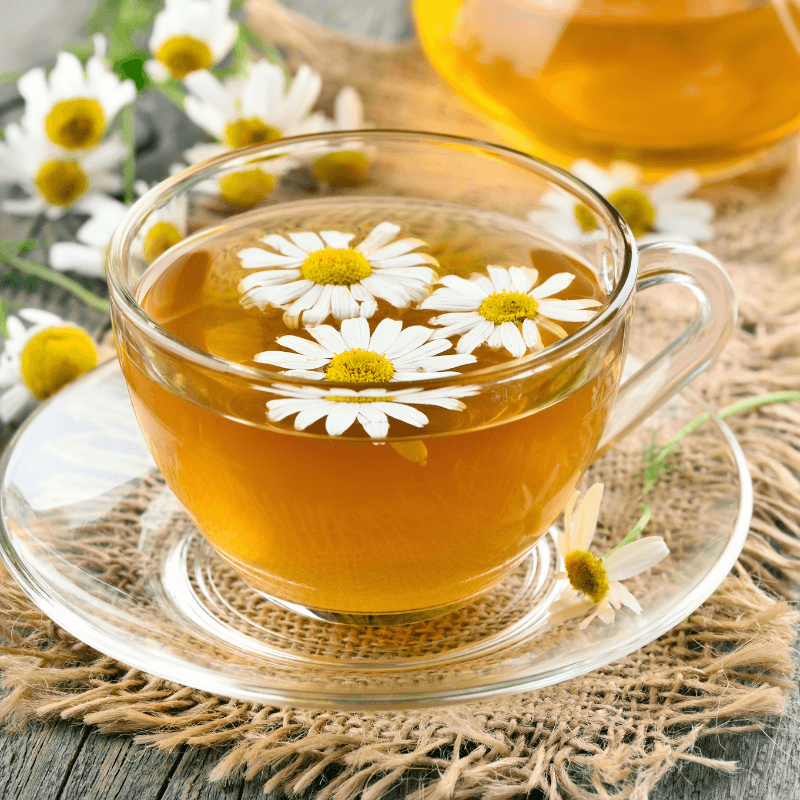
Herbal Tea Recipe: Chamomile Tea
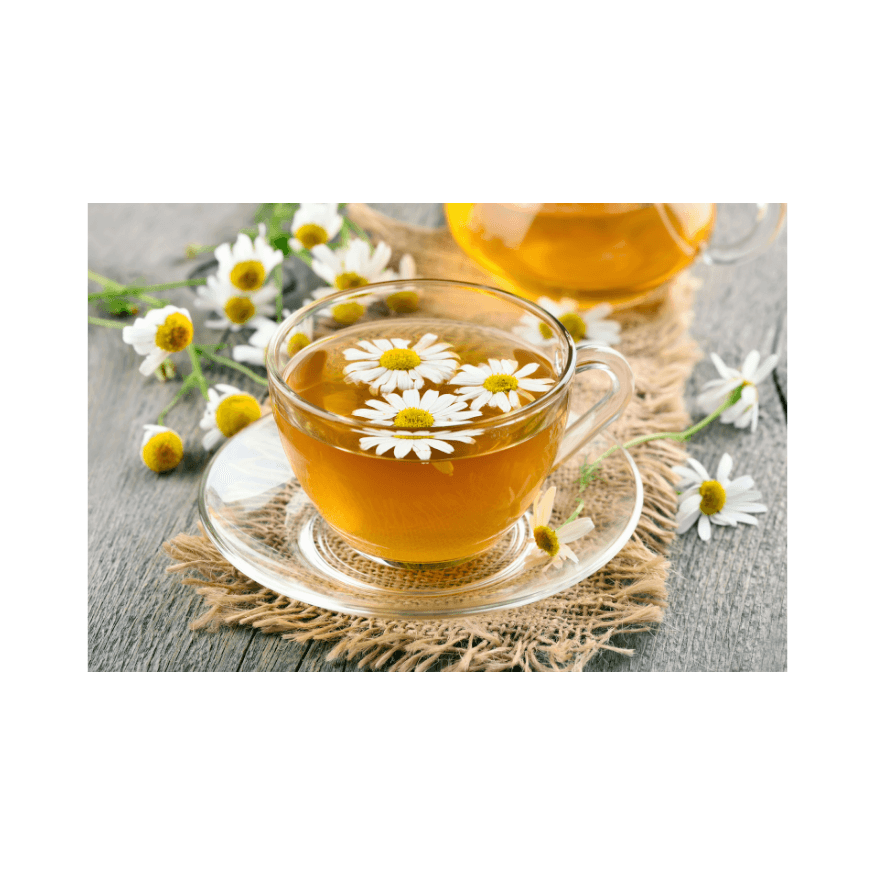
Chamomile brings a honeyed sweetness to the cup, with subtle notes of fresh apple and hay. The infusion is gentle, warming without being heating, and the aroma alone begins the work of softening tension. This tea works well in the evening when the day's accumulated stress needs release, or anytime the nervous system could use a reset toward calm.
Ingredients
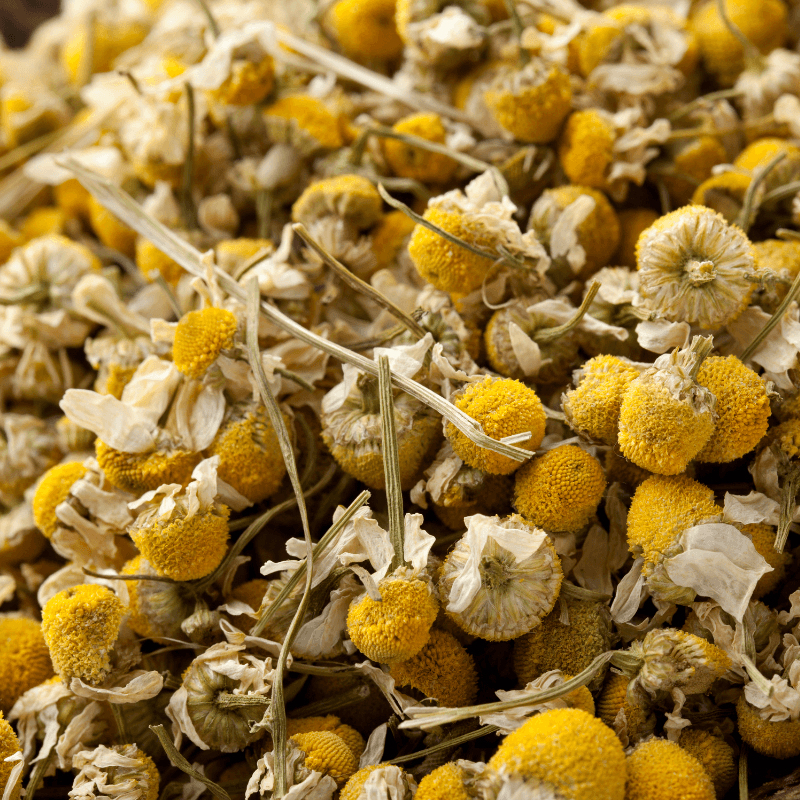
1 to 2 tablespoons dried chamomile flowers (or 3 to 4 tablespoons fresh flowers)
8 to 10 ounces hot water
Optional additions: a small spoonful of honey, a slice of lemon, or a sprig of fresh mint for brightness
Method
Place the chamomile flowers in a heat-safe cup or teapot with a lid.
Pour hot water over the flowers. Aim for water just below boiling (around 200°F) to preserve the delicate volatile oils.
Cover and steep for 5 to 10 minutes. Longer steeping brings out more of the herb's medicinal compounds but can increase bitterness.
Strain and sip slowly, inhaling the fragrant steam before drinking.
Notes for Use
Traditionally used as a calming tea to ease nervous tension, support restful sleep, soothe digestive upset, and provide gentle anti-inflammatory support. Can be consumed 1 to 3 times daily as needed. For sleep support, drink 30 to 60 minutes before bed. For children, use half the amount of herb and let steep for only 3 to 5 minutes for a milder infusion.
Safety Considerations
Generally safe for most people including children and pregnant women in normal amounts. Those with ragweed allergies should introduce cautiously. Discontinue use if any allergic reaction occurs.
Herbal Hair Rinse Recipe: Chamomile Brightening Tonic
German Chamomile has been used for centuries as a natural hair brightener and scalp soother. The flowers contain compounds that enhance golden tones in blonde and light brown hair while providing anti-inflammatory benefits for the scalp. This rinse works well for anyone seeking to add subtle highlights, soothe scalp irritation, or strengthen hair naturally.
Ingredients
1/4 cup dried German Chamomile flowers (or 1/2 cup fresh flowers)
2 cups boiling water
Optional additions: 1 tablespoon apple cider vinegar for shine, 2 drops lavender essential oil for fragrance, 1 teaspoon honey for moisture
Method
Place chamomile flowers in a heat-safe bowl or jar.
Pour boiling water over the flowers and cover.
Steep for 30 to 60 minutes, allowing the infusion to cool to room temperature. For maximum brightening effect, steep for the full hour.
Strain thoroughly, pressing flowers to extract all liquid.
If using optional additions, stir them in now.
Application
After shampooing and conditioning as usual, pour the cooled chamomile rinse slowly over clean hair, massaging into scalp and working through to ends. Catch excess in a basin and re-pour 2 to 3 times for maximum benefit. Do not rinse out. Gently towel dry and style as normal.
For brightening effects, use 2 to 3 times per week. For scalp health, use weekly. The subtle lightening effect is cumulative and most visible on blonde, light brown, or gray hair. Sun exposure after application enhances brightening properties.
Notes for Use
Traditionally used to add golden highlights to light hair, soothe irritated or flaky scalps, strengthen hair follicles, and impart shine. Safe for color-treated hair, though may slightly fade artificial color over time. Can be stored in refrigerator for up to one week.
Historical References
Chamomile's medicinal use stretches back thousands of years, documented in ancient Egyptian, Greek, and Roman texts. The Egyptians dedicated chamomile to the sun god Ra and valued it above all other herbs for its wide-ranging applications, using it in embalming practices and as a remedy for fevers and ague. The name "chamomile" derives from the Greek chamaimelon, meaning "ground apple," a reference to the plant's low-growing habit and apple-scented flowers.
Dioscorides, the ancient Greek physician, documented chamomile extensively in his De Materia Medica (circa 50-70 CE), recommending it for digestive complaints, women's health concerns, and as a topical application for inflammation. Pliny the Elder noted its use for headaches and bladder disorders. In medieval Europe, chamomile was one of the nine sacred herbs of the Anglo-Saxons, considered essential for protection and healing.
Nicholas Culpeper, the 17th-century English herbalist, wrote extensively about chamomile in his Complete Herbal, praising it for "comforting the brain" and easing conditions arising from tension and coldness in the body. He recommended it for nearly every digestive ailment and noted its particular affinity for calming restlessness in children.
The Eclectic physicians of 19th-century America, who blended Native American plant knowledge with European herbal traditions, used chamomile extensively. They valued it especially for what they termed "nervousness with digestive involvement," recognizing the gut-brain connection long before modern science confirmed it. King's American Dispensatory (1898) detailed numerous preparations and applications, establishing chamomile as a cornerstone of American botanical medicine.
In traditional German medicine, chamomile earned the nickname alles zutraut, meaning "capable of anything," reflecting its versatility and reliability across a spectrum of common complaints. This reputation for gentle effectiveness has carried chamomile through millennia into modern herbalism, where it remains one of the most prescribed and trusted plant medicines worldwide.
Folk and Spiritual Medicinal Uses
In European folk magic, chamomile has long been recognized as a plant of peace, prosperity, and protection. English and Irish herbalists planted it near doorways and along garden paths, believing it attracted beneficial energies and repelled negativity. The practice of growing chamomile as a "lawn" in monastery gardens wasn't merely practical, it was believed that walking on chamomile released its peaceful essence, blessing those who tread upon it.
In folk witchery traditions, chamomile was used in prosperity work, but with a different quality than aggressive money-drawing herbs. Its energy was understood to attract gentle abundance, steady income, and financial peace rather than sudden windfalls. Dried chamomile flowers were tucked into money sachets with lodestones and cinnamon, or scattered in business premises to encourage calm, fair dealings and repeat customers. The logic was simple: chamomile's calming nature soothed the anxiety that often blocks abundance.
Hoodoo practitioners used chamomile in gambling hands and court case work, not for luck exactly, but to calm the practitioner's nerves so they could think clearly and act wisely. It was sewn into flannel squares with High John root for this purpose, or the tea was drunk before important encounters where staying calm would mean the difference between success and failure.
In love work, chamomile was used to ease relationship tensions and encourage peaceful communication. It wasn't for drawing new love but for settling the kind of irritable energy that erodes existing bonds. Couples would bathe in chamomile tea before difficult conversations, or sleep on pillows stuffed with the flowers to encourage dreams that brought resolution to waking conflicts.
Appalachian granny witches burned dried chamomile in sickrooms, believing the smoke carried away fever and fretfulness. They made blessing waters infused with chamomile to anoint children before bed, a practice that blended protective magic with the plant's genuine nervine properties.
The spiritual essence of chamomile teaches the power of softness, showing that yielding is not weakness but wisdom. It reminds us that sometimes the most powerful magic is simply creating space for peace to enter.
Affirmations: "I release tension and welcome peace. I am held by gentle forces. I allow softness to be my strength."
Spiritual Ritual Use: Peace magic, blessing children, releasing anger, prosperity work with calm intention, dream work, meditation enhancement, protection through peace, communication healing.
Gemstones: Blue Lace Agate, Moonstone, Rose Quartz
Phase of the Moon: Waning Moon for releasing tension and anger, New Moon for fresh starts in peace, Full Moon for prosperity work
Vibe Code: Peace, Gentleness, Release, Comfort, Sweet Dreams, Inner Quiet
German Chamomile: Ancient Medicine for Modern Pain & Peace
Discover the timeless wisdom of German Chamomile, the blue-hearted flower revered across cultures for millennia as nature's gentle remedy for pain, inflammation, restless minds, troubled bellies, and hair that needs brightening and strength.

Coming soon!
The Herbalist's Library: Chamomile
Chamomile's place in herbal medicine is uncontested. From ancient texts to modern clinical research, the plant has been exhaustively documented. For those seeking to understand its full therapeutic range, energetic properties, and practical applications, the following texts offer trusted guidance.
Foundational Herbals
A Modern Herbal by Mrs. M. Grieve remains essential reading, documenting chamomile's extensive use in European folk medicine and its transition into modern Western herbalism. Grieve details both German and Roman varieties, their distinctions, and traditional preparation methods. Her work captures the herb's reputation across cultures and provides historical context that deepens contemporary practice.
The Herbal Apothecary by JJ Pursell offers clear, practical guidance for preparing chamomile in various forms, including teas, tinctures, oils, and salves. Pursell's approach is accessible for beginners while remaining thorough enough for experienced herbalists seeking to refine their craft.
The Complete German Commission E Monographs: Therapeutic Guide to Herbal Medicines provides clinical validation for chamomile's traditional uses, offering dosage guidelines, safety information, and evidence-based applications that bridge folk wisdom with modern medical understanding.
Clinical & Scientific Perspectives
Herbal Medicine: Biomolecular and Clinical Aspects, edited by Iris F. F. Benzie and Sissi Wachtel-Galor, includes peer-reviewed research on chamomile's active constituents, particularly the anti-inflammatory and anxiolytic compounds that account for its effectiveness. This text is invaluable for understanding the scientific basis behind traditional applications.
The Way of Herbs by Michael Tierra contextualizes chamomile within multiple herbal systems, including Traditional Chinese Medicine, Ayurveda, and Western clinical herbalism. Tierra's integrative approach shows how chamomile fits into broader constitutional and energetic frameworks.
Herbal Medicines by Joanne Barnes, Linda A. Anderson, and J. David Phillipson provides comprehensive pharmacological data, drug interactions, and safety profiles, making it essential for clinical herbalists and those working alongside conventional medicine.
Energetic & Traditional Perspectives
The Earthwise Herbal: A Complete Guide to Old World Medicinal Plants by Matthew Wood explores chamomile's energetic signatures and its applications in traditional Western herbalism. Wood's approach, rooted in the doctrine of signatures and direct plant observation, offers insight into chamomile's subtle actions on the nervous system.
The Practice of Traditional Western Herbalism by Matthew Wood deepens the energetic understanding, particularly chamomile's cooling, relaxing nature and its specific indications based on tissue states and constitutional patterns.
Children's Health
Rosemary Gladstar's Herbal Recipes for Vibrant Health includes gentle preparations specifically for children, demonstrating chamomile's role as one of the safest and most effective herbs for pediatric use. Gladstar's formulations are time-tested and practical.
Natural Remedies for Children by Aviva Romm provides evidence-based guidance on using chamomile for common childhood complaints, from colic and teething to restless sleep and anxiety, with clear dosing protocols.
Folk Magic & Spiritual Use
Cunningham's Encyclopedia of Magical Herbs by Scott Cunningham documents chamomile's extensive use in folk magic, prosperity work, and protection rituals. Cunningham's encyclopedia remains a go-to reference for understanding the magical correspondences that have accompanied chamomile's medicinal use for centuries.
The Master Book of Herbalism by Paul Beyerl explores chamomile's role in ritual work and its energetic properties as understood in pagan and witchcraft traditions, offering practical suggestions for spiritual applications.
• Affiliate links included. We earn a small commission from purchases at no cost to you.
Educational purposes only. Not medical advice. Consult a healthcare provider before use.
