
Betony
Stachys officinalis
Lamiaceae (Mint Family)
Native Countries / Native to / Habitat
Native to Europe, Western Asia, and North Africa. Thrives in open deciduous woodlands, sunny meadows, hedgerows, grassy borders, and light, acidic heath soils.
Betony (Stachys officinalis)
Common Name Betony (Wood Betony, Bishopswort, Purple Betony)
Essence Overview
Betony is the sovereign anchor of physical consciousness. When mental chatter, chronic tension, and emotional overwhelm cause your energy to retreat upward into a racing, spinning head, Betony steps in to pull that scattered vitality back down through the spine, rooting it firmly into the physical core. It does not act as a dulling sedative; it is a restorative nervine tonic that realigns the central nervous system with the digestive gut axis, calming erratic electrical signaling and establishing quiet, unyielding equilibrium.
Energetic & Emotional Profile
Its energetic signature is slightly warming, drying, bitter, and astringent. Betony ministers directly to those whose boundaries have worn paper-thin from chronic mental strain, overthinking, and energetic hypersensitivity. Emotionally, it provides a quiet sanctuary from sensory overload, dispelling the anxiety of being disconnected from one’s physical foundation. It grants you the grounding fortitude to inhabit your body fully, silence looping obsessive patterns, and maintain clear sovereignty over your mental landscape.
Traditional Uses Traditional
European herb craft held Betony as an almost universal remedy for disorders originating in the head and nervous system. Consumed as daily infusions, powdered leaves, and tinctures, it was the premier historical botanical for resolving chronic tension headaches, dizziness, digestive distress linked to nervous exhaustion, and melancholia. In Anglo-Saxon and Renaissance medicine, Betony was revered as both an indispensable domestic pharmacy staple and a premier protective herb carried to guard against nightmare disturbances and unquiet minds.
Safety Considerations
Exceptionally safe botanical with no documented toxicity in standard therapeutic dosages. Because it possesses mild emmenagogue properties that encourage pelvic circulation, massive medicinal doses should be avoided during early pregnancy.
Tags
nervine-tonic, tension-headaches, grounding-herb, mental-clarity, nervous-exhaustion, boundary-defense, solar-plexus, traditional-medicine, calming ally




Tea Recipes Herbal Infusion
Betony Grounding Central Axis Tea
Betony brews a rich, golden-amber tea with a pleasant, earthy, black-tea-like flavor that carries subtle bitter and aromatic notes. It grounds the mind within twenty minutes of sipping.
Ingredients
1 to 2 teaspoons dried Betony aerial parts
8 to 10 ounces boiling spring water
Optional additions: A sprig of spearmint or a pinch of chamomile for enhanced relaxation
Method
Place dried Betony aerial parts into a ceramic teapot or heat-safe mug.
Pour boiling water directly over the herb.
Cover with a lid to keep the aromatic constituents contained and steep for 10 to 15 minutes.
Strain through a fine mesh sieve.
Drink warm, allowing the rich, earthy warmth to ground your breathing.
Notes for Use
Drink 1 to 2 cups daily during periods of intense computer work, intellectual fatigue, or whenever tension begins creeping into the temples, neck, and shoulders.
Safety Considerations
Well tolerated by most people. Restrict large doses during early pregnancy.
Healing Benefits and Preparations
Indications Uses:
Chronic tension headaches, migraine support, nervous exhaustion, digestive upset caused by anxiety, neck and shoulder muscle contraction, restless mind insomnia, mental burnout, emotional hyper-reactivity.
Constituents: Betonicine, stachydrine, tannins (astringent principles), caffeic acid, chlorogenic acid, rosmarinic acid, bitter principles, trace volatile oils.
Preparations: Infusion (tea), alcohol tincture (1:5, 45% alcohol), powdered leaf capsules, herbal infused wine, headache compresses.
Dosage: Infusion: 1 to 2 teaspoons steeped in 8 oz water, 2 to 3 times daily. Tincture: 30 to 60 drops in water, 2 to 3 times daily. Powder: 1 to 2 grams daily.
Actions: Nervine tonic, mild astringent, bitter stomachic, antispasmodic, alterative, mild carminative.
Safety Contraindications: Avoid excessively high medicinal dosages during pregnancy.
Energetics: Slightly warming to neutral, drying, bitter, mildly sweet, astringent.
Duration: Head and neck tension relief is often felt within 30 to 60 minutes; systemic reconstitution of a frayed nervous system unfolds over 2 to 4 weeks of consistent administration.
Potency Level: Moderate—profound cumulative tonic action.
Taste Profile: Earthy, mild black-tea tannin flavor, faintly bitter with a grounded herbaceous finish.
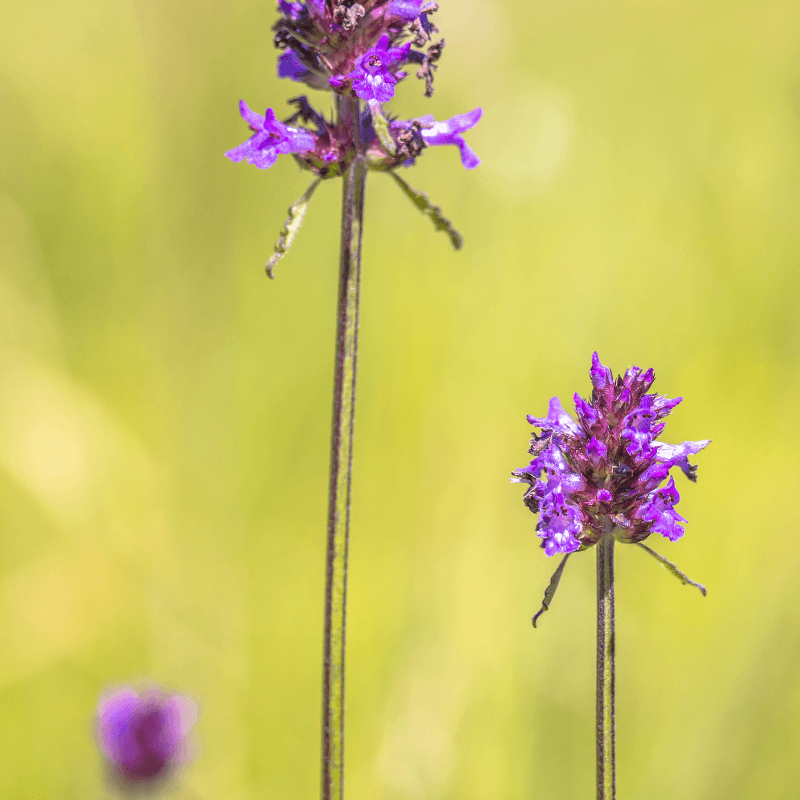
Growth Habitat: Herbaceous perennial growing 1 to 2 feet tall, featuring scalloped, oblong basal leaves and dense terminal spikes of two-lipped purple-magenta flowers; prefers open woods and sunny, well-drained pastures.
Harvest Notes: Gather the flowering spikes and prime upper foliage in early-to-mid summer while in peak bloom. Dry slowly in a dark, airy location until leaves crumble easily between fingers.

Historical References
Few herbs command a more illustrious record in classical and medieval European history than Betony. Antonius Musa, the personal physician to Roman Emperor Augustus Caesar, authored an entire treatise dedicated exclusively to the herb, proclaiming it as an effective remedy for no fewer than 47 physical conditions.
In medieval Britain and Europe, it was cultivated around every monastery and domestic garden, immortalized in the ancient Italian proverb: "Vende la tonica e compra la betonica" ("Sell your coat and buy Betony"). In the Anglo-Saxon Lacnunga, it was recorded as one of the primary physical and spiritual remedies to defend against nightmares, demonic apparitions, and sudden frights.
Folk and Spiritual Medicinal Uses
Across European folk magic, Celtic tradition, and modern occult herbalism, Betony is considered one of the most powerful plants for boundary defense, warding against evil spirits, and breaking psychic parasitism. Planted along property borders or placed near windows, it was believed to deflect dark
magic, nightmares, and malicious astral entities. Carried in purple or white mojo bags, Betony prevents psychic drain, shields empaths from absorbing outside emotional turbulence, and grounds scattered spiritual practitioners back into their physical bodies during deep ritual work.
Affirmations: "I inhabit my body with calm certainty. My mind is quiet, my roots run deep, and no chaotic force can pull me from my center."
Spiritual Ritual Use: Dream pillows to stop nightmares, boundary-sealing charms, psychic protection, uncrossing rituals, grounding ceremonies, head-clearing spiritual baths.
Gemstones:
Amethyst (mental peace, spiritual defense)

Black Tourmaline (grounding, deflecting negativity)

Smoky Quartz (anchoring vital energy)

Chakra | Role of Betony | Key Spiritual Action |
Third Eye (Primary)  | Quietens chaotic thoughts, banishes nightmares, provides psychic protection, and restores Mental Sovereignty. | "My mind is peaceful." |
Root (Primary)  | Anchors vital energy, drives grounding ceremonies, and builds an Inner Sanctuary against negativity. | "I am deeply grounded." |
Crown (Supporting)  | Clears the head during spiritual baths, offering mental peace and shielding from spiritual distress. | "My spirit is shielded." |
Phase of the Moon:
Waning Moon for banishing nightmares and chaotic thoughts
New Moon for anchoring peace and setting firm energetic boundaries

Vibe Code: Grounding, Inner Sanctuary, Mental Sovereignty, Shielding, Stillness, Equilibrium.
YouTube Video Library
Betony: Ancient Sovereign of Mind, Head & Nervous Alignment
Explore the rich historical medicine and neurological grounding of Wood Betony (Stachys officinalis), the premier European herb for calming racing thoughts and tension headaches.

YouTube Link: coming soon!
The Herbalist's Library: Betony
The Herbal Apothecary by JJ Pursell provides practical formulation guidance, including how to prepare alfalfa as tea, tincture, and powder. Pursell's approach honors tradition while offering clear, accessible instruction for modern practitioners.

Folk & Spiritual Traditions
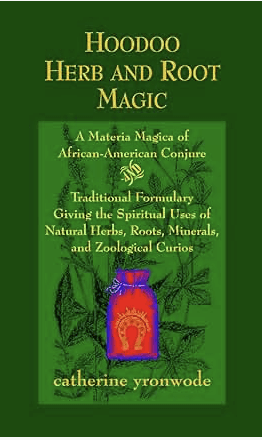
For those drawn to alfalfa's role in prosperity work and folk magic, Hoodoo Herb and Root Magic by Catherine Yronwode explores its use in money-drawing rituals and mojo bags. Yronwode's meticulous research into rootwork traditions makes this an authoritative source for spiritual herbalism.
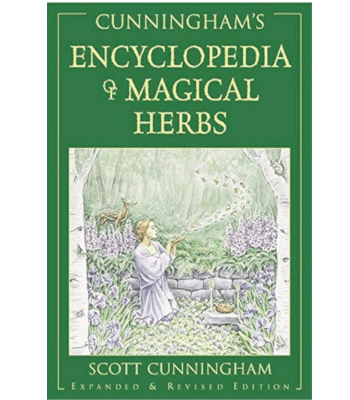
Cunningham's Encyclopedia of Magical Herbs by Scott Cunningham offers a broader view of alfalfa's place in kitchen witchery and abundance rituals, with practical suggestions for integrating it into daily practice.
Nutritive & Clinical Perspectives
The Way of Herbs by Michael Tierra includes alfalfa among the great nutritive tonics, particularly valued in Traditional Chinese Medicine-influenced Western herbalism for building blood and restoring vitality after illness or childbirth.

For a deeper dive into the plant's biochemical constituents and therapeutic applications, Herbal Medicine: Biomolecular and Clinical Aspects, edited by Benzie and Wachtel-Galor provides peer-reviewed research on alfalfa's saponins, minerals, and phytonutrients.

Foraging & Cultivation
The Wild Medicine Solution by Guido Masé explores alfalfa within the context of naturalized plants that have become part of regional food and medicine systems, with attention to ethical wildcrafting and sustainable use.

*Affiliate links included. We earn a small commission from purchases at no cost to you.
Educational purposes only. Not medical advice. Consult a healthcare provider before use.
